Newsletter Subscribe
Enter your email address below and subscribe to our newsletter

 ByJohn A
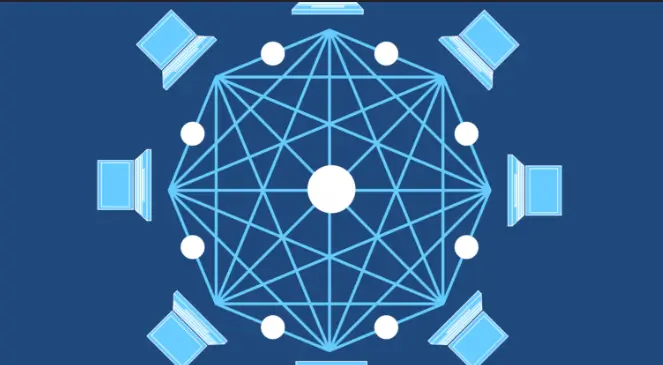
Crypto nodes are networked computing entities that sustain and validate blockchains. They execute consensus protocols, propagate transactions, and store ledgers to ensure consistency across participants. Their role ranges from full validators to light relays, supporting reliability, security, and verifiability. By distributing trust, they enhance privacy and resist censorship. The spectrum of node types and use cases invites further scrutiny into practical everyday interaction and governance implications. The implications extend beyond technical function, inviting deeper consideration of systemic resilience.
Crypto nodes are networked computing entities that participate in maintaining and validating a blockchain. They execute consensus protocols, propagate transactions, and store ledgers, ensuring consistency across participants. Node incentives align participation with success, promoting honest validation and resource contribution. Network reliability emerges from redundancy, fault tolerance, and transparent governance, enabling resilient operation despite failures or adversarial conditions.
See also: Christopher Morgan Biography Career and Personal Life
Nodes underpin privacy and censorship resistance by enabling user-controlled data flow and independent verification. In decentralized networks, nodes distribute trust, reduce single points of failure, and limit centralized surveillance. This architecture highlights privacy implications through selective disclosure and peer verification.
Censorship resistance emerges from distributed consensus, ensuring access and integrity even under pressure, reinforcing freedom without compromising verifiability or accountability.
Distributed networks rely on a variety of node configurations to fulfill different operational goals, from validation and governance to data dissemination and user authentication.
Types of Nodes: roles vary from full validators to lightweight relays, each with distinct node requirements such as hardware, bandwidth, and uptime.
Clarity in node roles informs governance, security, and resilient use cases across decentralized ecosystems.
For everyday users, engaging with blockchain nodes does not require coding skills, yet it necessitates understanding basic interaction patterns and available tools. Users rely on straightforward workflows via web interfaces and mobile apps, evaluating node costs, reliability, and response times. Clear user interfaces reduce friction, enabling consented participation, monitoring, and light interactions, while preserving autonomy and data sovereignty.
Yes, a node can run on a mobile device, though constraints apply. What about mobile data costs, energy efficiency? It depends on the app, participant requirements, and network design; efficiency and data use should guide freedom-minded choices.
Anecdotally, a lighthouse keeper compares network security to staking requirements and slashing mechanisms; nodes generally do not require staking like validators, though some ecosystems impose deposits or penalties to enforce reliability and deter misbehavior, ensuring consensus integrity.
Typical node bandwidth depends on network activity and protocol type; average bandwidth ranges from a few Mbps to tens of Mbps, with peaks during bursts. Bandwidth requirements impact node scalability and overall system resilience.
Nodes can improve verification speed for users by distributing workload, though gains hinge on network latency and consensus design; heavy bottlenecks often stem from centralized aggregation, not node count, leaving slow verification a persistent risk in practice.
Suspense tightens as it answers: No, nodes’ legality varies by jurisdiction. Legal compliance in jurisdictions and cross border data rules govern operations; differing political regimes, financial regulations, and data localization policies determine where nodes may operate lawfully.
Crypto nodes underpin trust, transparency, and resilience in decentralized networks. They validate, propagate, and store the ledger, ensuring consistent state across participants and enabling verifiable governance without centralized intermediaries. Their distributed nature enhances privacy and censorship resistance while increasing fault tolerance. From validators to lightweight relays, each role supports reliability and security in real time. In sum, understanding nodes is understanding the system’s backbone, where the whole is stronger than any single point of failure, and visions translate into verifiable reality. Grounded, every cog matters.